The short answer
What is a zambra gitana?
What a zambra gitana is, where the dance comes from, how a Sacromonte cave show differs from a tablao, and what the Granada ticket gives you.
Book the cave zambra ↗Quick answer
A zambra gitana is the flamenco style of Granada's Sacromonte hill: a dance and song form tied to Gitano weddings, danced barefoot with finger cymbals, and now staged for visitors in cave rooms. The ticket on this site is a one-hour show in one of those caves. A cave show differs from a tablao by its setting, with whitewashed rock and close seating, rather than a stage in a restaurant or a theatre.
What the words mean
Wikipedia traces zambra to the Andalusi Arabic zamra, itself from the classical Arabic zamr, and Andalucía's tourist board glosses the Arabic word as a musical piece, a tocata. Gitano is the Spanish word for the Roma of Spain, and UNESCO uses the phrase Gitano (Roma) for the community that played an essential role in flamenco's development. A zambra gitana is therefore the zambra of that community. Wikipedia classes the zambra as a flamenco dance belonging to the Romani communities of Granada and Almería provinces, which is why the name Granada keeps appearing beside it. The venue's website calls its own show a zambra gitana, and describes it as a festival where the artists interact with you.
How it looks and sounds
Wikipedia says the zambra is danced barefoot with finger cymbals, with the blouse tied under the bust and the skirt flaring into a ruffle. UNESCO calls flamenco a fusion of singing, dancing and guitar playing, using the Spanish terms cante, baile and toque, with castanets, clapping and foot-stamping as extras. In its description men's dance leans on the feet while women's is softer and more sensual, and cante lyrics stay short and plain. The ticket adds the rhythm of zapateado, the percussive footwork. The Sacromonte Caves Museum cites the anthropologist Carmen Bernand, who defines the zambra as a sensual Moorish dance, danced to castanets and drums, that enlivened processions. In a small cave you can follow each strand in turn: the voice, the guitar, then the feet.
Why a cave on a hill
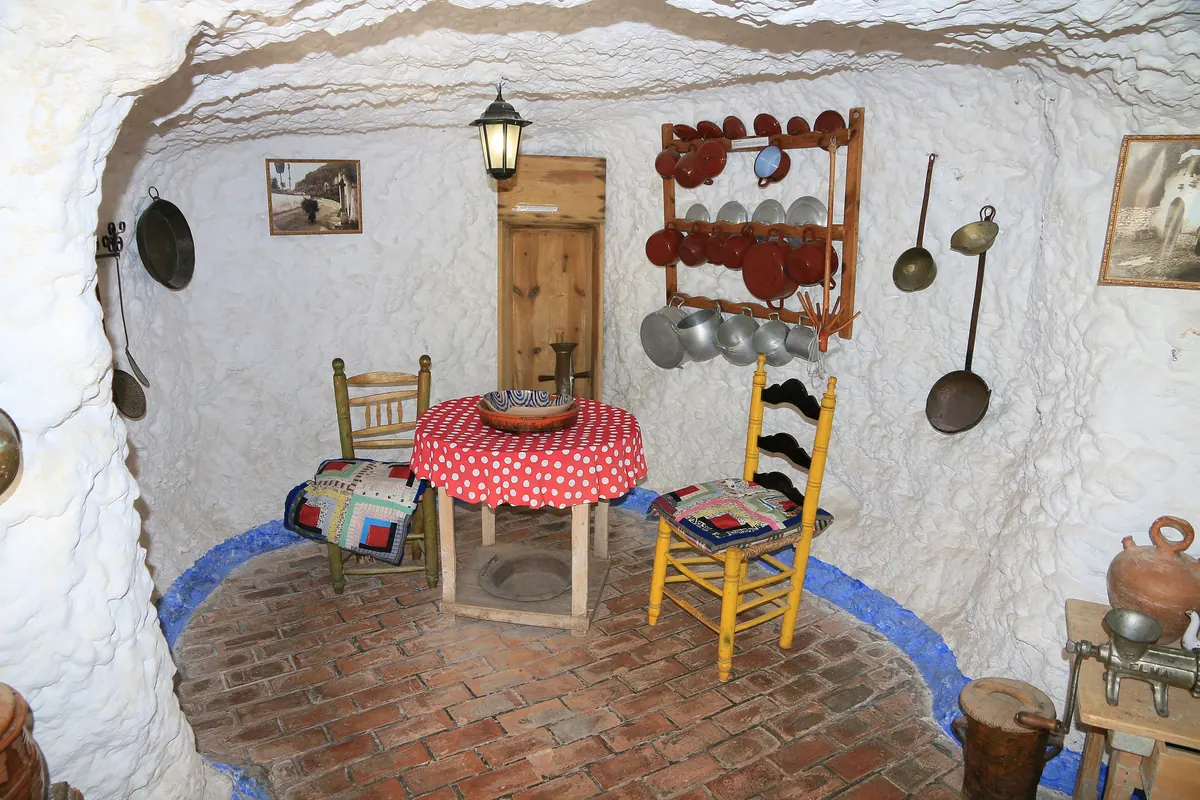
Wikipedia's Granada article calls Sacromonte the old neighbourhood of the Romani, who settled in the city after the conquest, and says it is full of whitewashed caves cut into the rock and used as homes. It stands on the Valparaíso hill, opposite the Alhambra. The same article describes the zambras of Sacromonte as old bridal parties that developed in these caves and have a unique character in the world of flamenco. That is why Granada's zambra shows are staged in cave rooms: the dance belongs to this hill, and the hill built the rooms. The same board says the caves are still homes to Gitano families, so a show room and a family home can sit side by side.
Weddings, a ban and a revival
Wikipedia says the zambra became a fixture of wedding ceremonies, and Andalucía's tourist board describes it as a regular feature of Gitano weddings. The board adds that the Inquisition outlawed zambras in the 1500s, yet the community went on dancing them out of sight, and that Romantic travellers of the 19th century, Washington Irving among them, spread their fame abroad. The Sacromonte Caves Museum says the Granada zambra was reborn in the middle of the 20th century, in step with the boom in international tourism. Wikipedia's Granada article says the old bridal parties disappeared for years before they were taken up again, and its zambra article says that today the dance is mostly performed for visitors in the caves of Sacromonte and of Almería.
Read next: Sacromonte: the hill of caves
A circle, not a stage
The venue's history page describes the old zambra as a flamenco festival held in the caves where families lived. It says the shows came about spontaneously in the shared rooms when a family gathered with music and dance and drew in passers-by, and that there was no need for a stage, only a circle of people with the artists performing inside. It adds that today the artists dance and sing in the centre of the cave while the audience sits around them. The page dates the cave on this ticket to 1951 and says the family that founded it still runs it. That circle is the clearest difference from a tablao.
The show on this ticket
This ticket buys roughly an hour of live flamenco in a cave on the Camino del Sacromonte, with entrance and one drink during the show; an option adds dinner. The venue's own website describes a show in two parts, and says the evening ends with a rumba in which visitors are invited to join. No ticket promises a particular piece on a particular night, so treat the outline below as a sketch of the evening and not a running order. The home page of this site sets out the dances the venue names, with what Wikipedia says about each.
- Part one portrays a Gitano wedding, introducing the bride and groom through dances such as the cachucha, tangos, a fandango and bulerías.
- Part two is bolder, more modern flamenco, with forms such as martinetes, alegrías and soleá, and the song "Granada".
- The finish is a rumba, with visitors invited to take part.
Cave show or tablao?
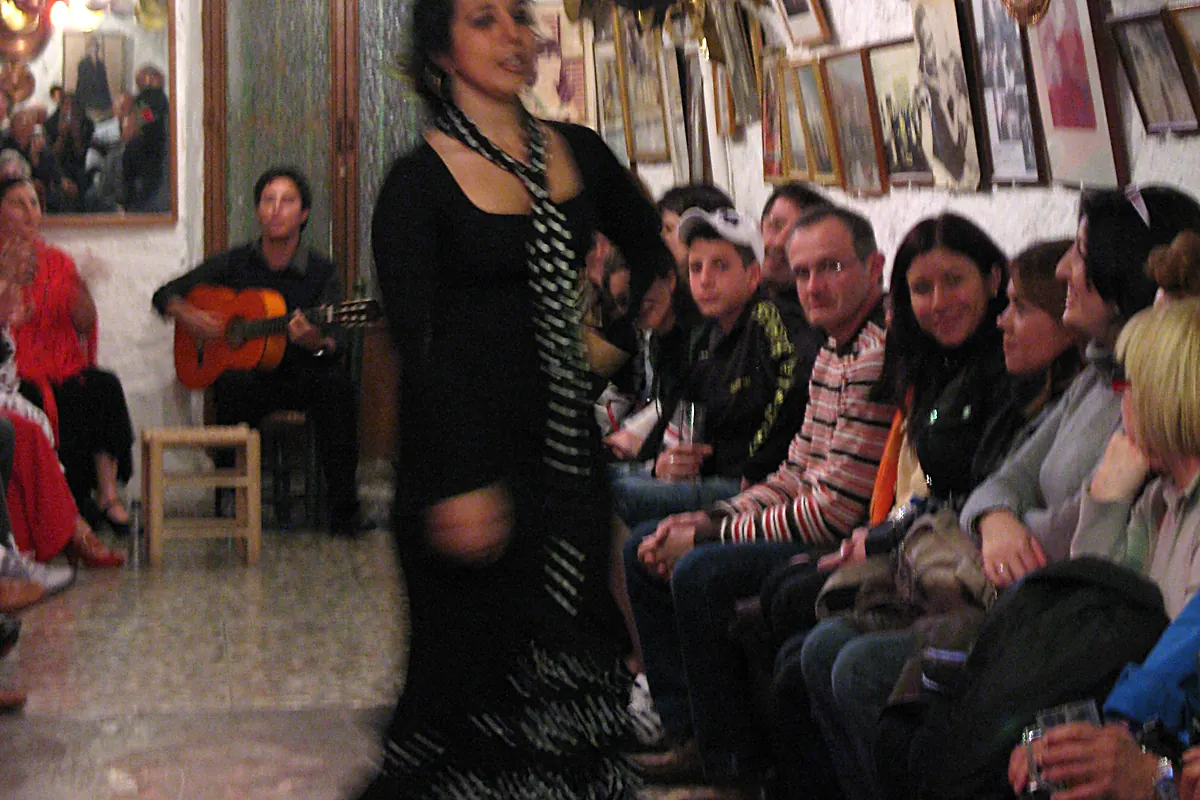
Wikipedia defines the tablao as a venue for flamenco shows, a model that took hold across Spain in the 1960s as the older cafés cantantes faded. Tablaos often pour drinks and serve tapas or a full meal. Wikipedia's Granada article separates the two kinds of night: the zambras of Sacromonte are staged in cave rooms, while the Albaicín has more classic flamenco shows, usually linked to restaurants. Both are flamenco. What changes is the room and the show: rock walls and the zambra's wedding tradition on the hill, a stage and a more classic programme below it. Wikipedia adds that most tablaos sit in Andalusia, often by the sea or in large cities.
- The cave: whitewashed rock, seats close to the performers, a show built on the wedding zambra, on the hill where the dance grew up.
- The tablao: a venue built for flamenco, often with a stage, drinks or a meal, clustered in Andalusia's cities and coastal towns.
- The shared ground: song, dance and guitar, and the compás, the rhythmic cycle, that holds them together.
What travellers say
Reviewers on the ticket page praise the passionate performances and the close cave setting, and many also like the dinner and the service. One reviewer calls the evening traditional and full of energy, and another says it brought them close to the dancers. Some mention cramped seating and suggest tighter control of numbers, and one found the end of the night a little rushed because the next group was due in. Read that as a pattern, not a promise about your night: the strength is the closeness, and the weakness is the same closeness.
What a cave gives you, and what it costs
A cave puts the performers close, and that closeness is why people book it. It also means you sit near your neighbours, and a tablao may give you more elbow room. The hill is steep, and the way down at night is as steep as the way up. The cave suits visitors who want to see the zambra where it grew up and care more about atmosphere than about a polished stage, and it suits couples and small groups who are happy to share a close room. A tablao may give you more space, but it will not give you the walls, and the walls are the point.
Who this isn't for
A stage, a fixed running order or a named piece are not what this ticket offers; the programme changes and the cave is not a theatre. A hushed recital is out too, because the venue describes its show as a festival and ends it with a rumba that invites the audience to dance. Anyone who needs generous elbow room, or finds steep streets and stairs at night hard, should look elsewhere. And if you are looking for a private family zambra, that is a different thing: Andalucía's tourist board notes that the caves remain family homes, where Gitano households hold their own zambras behind closed doors, quite apart from the shows staged for visitors.
Booking in brief
The ticket page lets you cancel for free until a day before the start, and to hold a date without paying yet. The show is marked wheelchair accessible, but the hill is steep, so put a question about the approach to the provider. Photo identification, a passport or ID card, is required. Each date lists its own options and start times, including the option that adds dinner. This guide quotes no prices; the booking page carries them live. For how to choose between the two versions, read the guide to show only or dinner.
Read next: Show only or with dinner?
Frequently asked questions
What is a zambra gitana?
It is a Granada style of flamenco dance and song, danced by the Romani families of Granada and Almería and linked to weddings. Today it is mostly staged for visitors in the caves of Sacromonte.
Is a zambra the same as flamenco?
A zambra is one style within flamenco. Wikipedia lists it among the palos, the traditional forms flamenco is built from, so a zambra show is flamenco with Granada's own character.
Why are zambras staged in caves?
Sacromonte is the cave-house neighbourhood where Granada's Romani settled, and the zambra is tied to that hill. The caves became the setting for shows for visitors.
How long is the show?
The ticket lists about one hour. Start times differ by date, and the calendar lists them.
Will I see a wedding scene and a rumba?
The venue's website describes a wedding part, a bolder second part and a closing rumba. Programmes change, and no ticket promises a given piece on a given night.
Sources
- UNESCO inscription text for flamenco, checked 25 Oct 2026
- Andalucía tourist board on the zambras of the Sacromonte caves, checked 25 Oct 2026
- Sacromonte Caves Museum on the origins of the zambra, checked 25 Oct 2026
- Venue website, flamenco show page, checked 25 Oct 2026
- Venue website, history of the Sacromonte caves, checked 25 Oct 2026
- Wikipedia, Zambra (dance), checked 25 Oct 2026
- Wikipedia, Tablao, checked 25 Oct 2026
- Wikipedia, Granada, checked 25 Oct 2026